
Dystopian fiction is bad for morale. Dystopian fiction is bad for optimism. Dystopian fiction is bad for book clubs that want a happy ending. At least, that’s what some people say.
They claim dystopian stories are too bleak, too depressing, too focused on everything that’s wrong with the world. That they glorify suffering or instill hopelessness. That they show humanity at its worst and rarely offer a path forward.
But here’s the truth: dystopian fiction doesn’t ignore the problems. It exposes them. It doesn’t cause despair — it names it, so we can face it. It holds up a cracked mirror and asks: is this really what we want our future to look like? And then it dares us to change it.
Dystopian fiction is resistance. It holds up a mirror to power and whispers, “We see you.” And in a world where authoritarianism is on the rise, from surveillance states to banned books to corporate control, these stories matter more than ever.
From Orwell to Atwood, dystopian fiction has always punched up. It thrives in times of political unrest, exposes censorship and inequality to the light, and blooms in the cracks of crumbling democracies. And right now? It’s having a moment.
Because people are angry. People are scared. People are watching the world tilt toward cruelty and asking, “Is this normal?” Dystopian fiction answers: “No. And you don’t have to accept it.”
Here are five dystopian books that don’t just entertain—they help us learn how to fight back.
V for Vendetta by Alan Moore & David Lloyd

This classic graphic novel takes aim at fascism, surveillance, and state-sanctioned fear. A masked revolutionary known only as V takes on a totalitarian British regime, using symbolism and sabotage to incite rebellion. The parallels to real-world authoritarianism are chilling—and intentional. It’s a story about the power of ideas, and the terrifying lengths the powerful will go to suppress them.
The Unincorporated Man by Dani & Eytan Kollin

Set in a future where personal identity is literally bought and sold, this book skewers capitalist excess, government overreach, and corporate control. The system feels eerily familiar: a world where human rights take a backseat to profit, and dissent is conveniently labeled as inefficiency. The protagonist—a man frozen before this dystopia took hold—becomes the system’s greatest threat.
Find your next favorite dystopian read
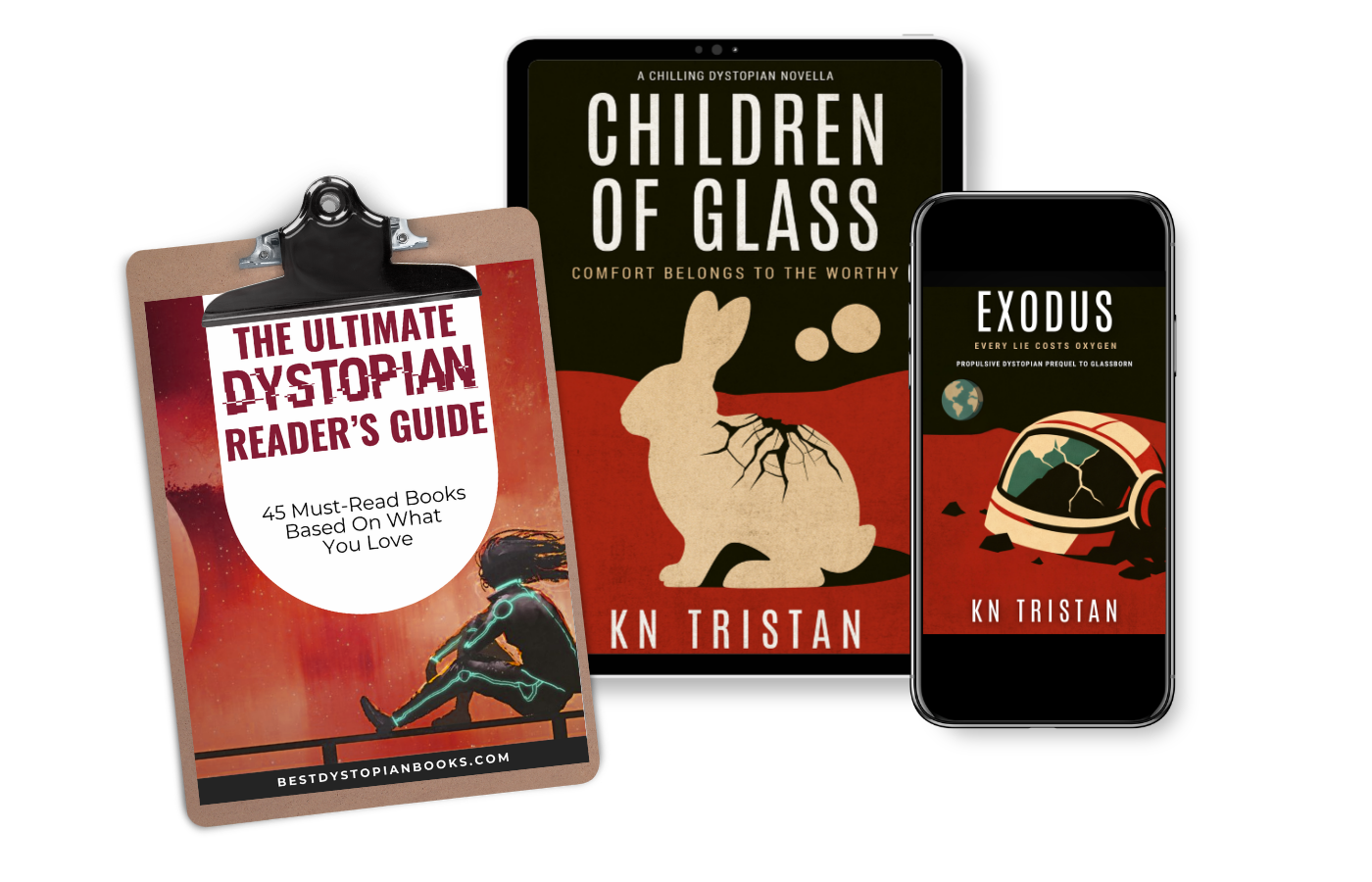
My Ultimate Dystopian Starter Pack includes two Glassborn Chronicles novellas – a dystopian sci-fi series about scarcity, division and AI governance – as well as my top picks for the best dystopian books of all time.
1984 by George Orwell

The blueprint for modern dystopia. Orwell’s masterpiece is a scathing critique of authoritarianism, censorship, and surveillance culture. Big Brother isn’t just watching—he’s rewriting history, criminalizing independent thought, and turning fear into loyalty. Published in 1949, 1984 remains terrifyingly relevant in a world where truth is subjective and power thrives on manipulation. If you’ve ever wondered how fascism creeps in through bureaucracy and doublespeak, this book will answer—and haunt—you.
Manhunt by Gretchen Felker-Martin

This brutal, trans-led, gender-conscious post-apocalyptic novel is everything fascists hate: queer, political, unapologetically angry. Set in a world devastated by a virus that transforms people with high testosterone into monsters, it examines what happens when TERFs, incels, and extremists gain power—and what it takes to tear that power down. It’s not an easy read, but it’s a necessary one.
Feminist dystopias are a staple of the genre, and for good reason. From classics to modern indie titles, I’ve rounded up the best of the best.
Upright Women Wanted by Sarah Gailey

Set in a future Wild West run by fascists, this novella packs a sharp punch. Esther flees her past and joins a group of Librarians—supposedly government-approved distributors of moral materials—only to discover they’re actually smuggling resistance texts and sheltering queer outlaws. It’s a gritty, subversive ride through the ruins of American ideals, exploring rebellion, identity, and how even the smallest act of defiance can become a spark.
Why These Stories Matter
Resistance fiction isn’t just important when things get bad. It’s most powerful when people are still pretending everything’s fine.
These books remind us that no system is permanent. That power can be challenged. That ordinary people can say no. They offer catharsis—but also clarity.
And if you’ve ever found yourself watching the news with a knot in your stomach and thinking “this can’t be real,” dystopian fiction answers: “It is. Now what are you going to do about it?”