
Dystopian fiction is having a moment – search “dystopia is back” in any social media platform and you’ll find people gushing about everything from the latest season of Silo to brand-new smash-hits like Daggermouth. Dystopias are capturing our real-world anxieties and helping us process them in the safety of fiction, and readers are showing up in re-energized waves to this genre.
What do they really want out of this cultural resurgence, and what’s more, what kinds of stories are they rejecting?
I surveyed a cross-section of dystopian readers to find out exactly that – what they’re reading, how they’re finding new books, and what they’re craving more of. The results present a clear picture of a small, introspective genre poised for growth.
Methodology
This data comes from a 2026 dystopian reader survey conducted across the Best Dystopian Books newsletter, social media platforms and Reddit. In total, 80 readers responded. The survey included 9 multiple-choice questions and I chose not to collect demographic data, focusing instead on behavioral patterns and reading preferences.
Here’s what I learned…
Readers Want Resistance – But It Has to Come Honestly
Dystopian readers are overwhelmingly drawn to post-apocalyptic settings (76% of respondents), but that doesn’t mean they’re looking for grimdark, hopeless tales.
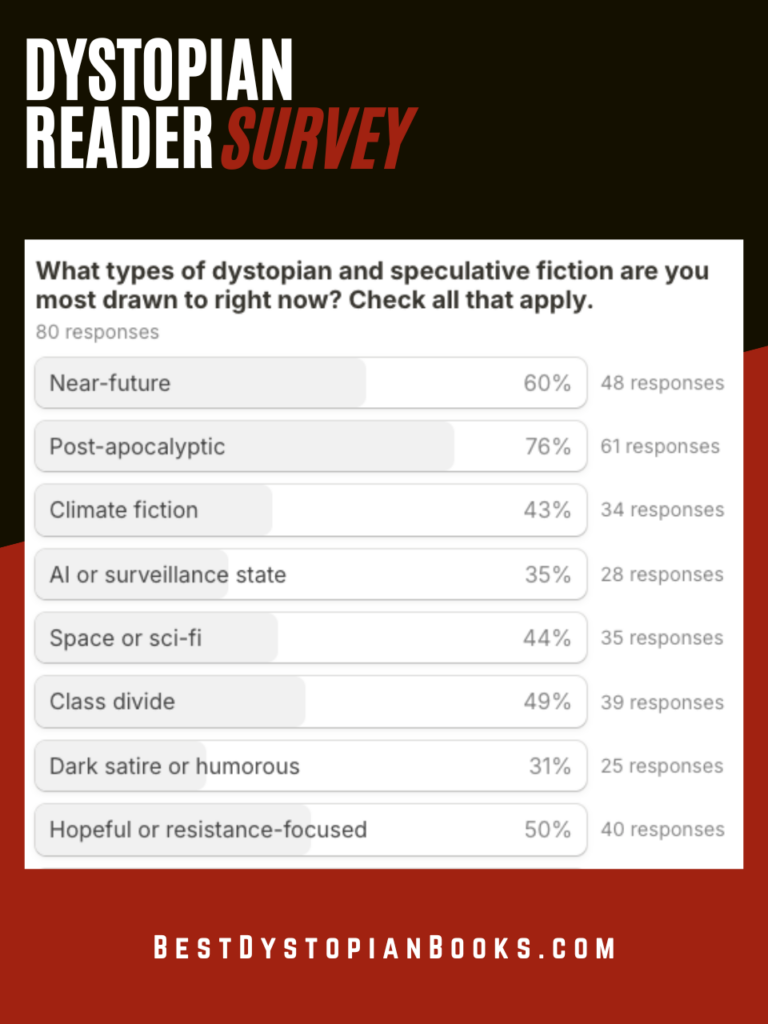
Readers want their apocalypses to focus on the resistance, if there’s still a unified enemy to fight, or hope for the future if they’re in the rebuilding phases (50%).
At the same time, when asked whether they prioritize hopeful endings or honest commentary – even if it’s bleak – 68% chose the commentary. Dystopian readers are gravitating toward books that ask hard questions and grapple with the answers honestly. They’re looking for books that have something real to say.
The strong interest in resistance-driven stories indicates readers still care about redemption arcs, change, and people pushing back against unfair systems. It’s just that the hope has to feel earned, and happy endings shouldn’t be forced.
The Biggest Turn-Off? Dystopian Readers are Tired of Lazily Written Villains
When asked which themes and tropes they’re sick of, dystopian readers overwhelmingly voted against cartoonishly evil villains (69%). A close tie for second (at 51% each) was between “chosen one” heroes saving the world and stories that focus more on the romance than the dystopia.
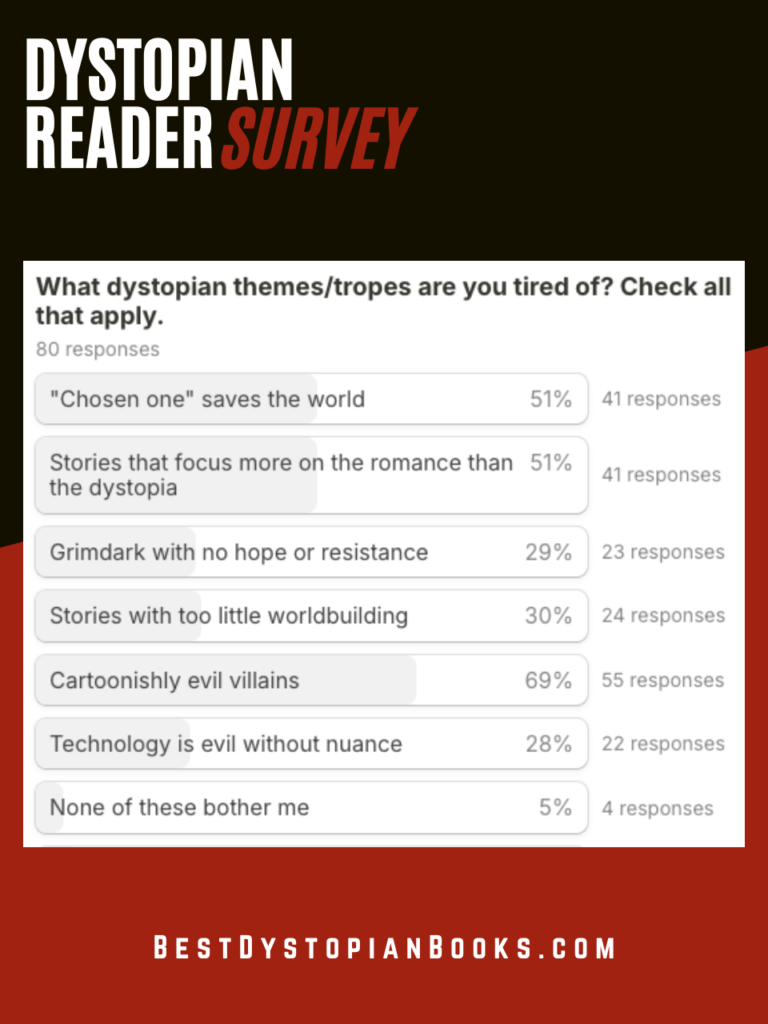
That’s a clear rejection of stereotypical and surface-level dystopian stories. Readers are looking for something deeper than an antagonist who exists only to be hated and a system that is evil without the examined why.
Several other frustrations reinforce that same pattern. 30% of readers want stronger worldbuilding and 28% are tired of technology that’s evil without any nuance to justify it. All of this points to readers looking for dystopias that feel believable and are not constructed from familiar shortcuts.
The Romance Divide
One result that stands out – especially given current trends – is the 51% of respondents who are tired of stories that focus more on the romance storyline than the dystopian elements. This is particularly interesting because dystopian romance has been growing rapidly, especially on platforms like TikTok.
What this suggests is that the genre may be splitting into two overlapping but distinct audiences:
- Romance readers discovering a new niche in that genre with dystopian themes
- Readers who are dystopian-first, and want the world, systems, and themes to take priority
Neither approach is wrong, but they’re not interchangeable. And for readers in the second group, romance isn’t the problem. It’s when the dystopian elements start to feel like a backdrop instead of the point.
Find your next favorite dystopian read
My Ultimate Dystopian Starter Pack includes two Glassborn Chronicles novellas – a dystopian sci-fi series about scarcity, division and AI governance – as well as my top picks for the best dystopian books of all time.
Most Dystopian Readers Don’t Discover Books Through Social Media
If you ask an author where they find their readers, they will most likely name a social media platform. Those can be great places to connect, however only about 15% of dystopian readers are looking on places like Tiktok, Instagram and Youtube for their next read.
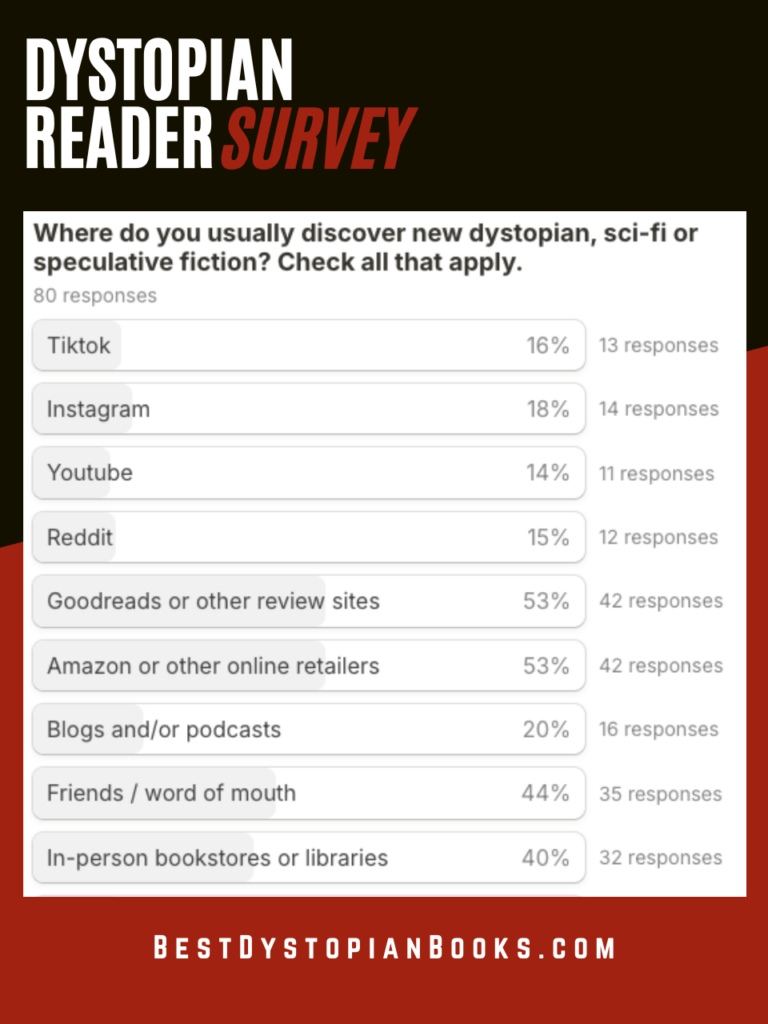
The biggest sources of discovery aren’t social platforms. Instead, readers reported finding dystopian books through:
- Amazon and other online retailers (53%)
- Goodreads and review sites (53%)
- Word of mouth (44%)
- In-person bookstores and libraries (40%)
In other words, when readers are actively looking for something new, they tend to go to places designed for search, browsing, and recommendations rather than passively scrolling.
Discovery vs. Discussion
Where this gets even more interesting is when you compare discovery to where readers actually talk about books. When asked where they discuss books:
- 34% said they don’t talk about books online at all
- 39% talk in private group chats with friends
- 34% use Goodreads or review sites
- Social platforms like TikTok (9%), Instagram (13%), and YouTube (4%) were much lower
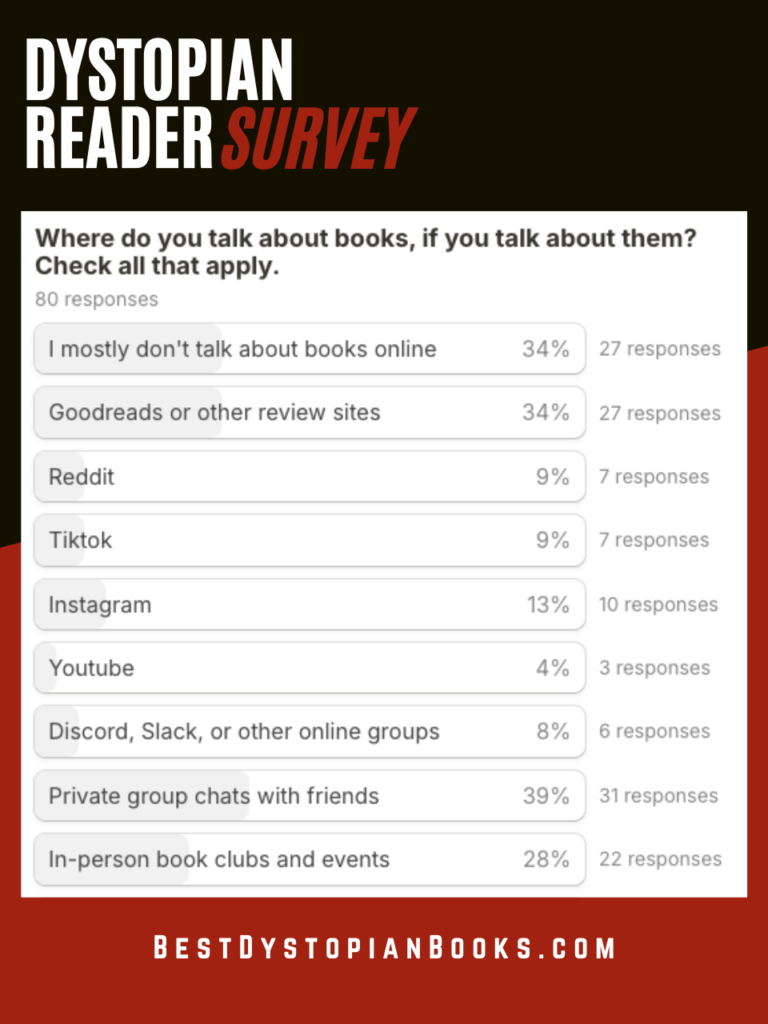
This reveals a clear split: discovery is intentional, discussion is private.
One of the most important takeaways here is how much of the dystopian reader community is essentially invisible. They’re not posting, commenting or reviewing, but they’re still reading and recommending to their own private connections.
Dystopian Readers Are Selective – and They Don’t Rush to Buy
One of the clearest signals revealed in the survey results was that dystopian readers are very careful about the books they read. This genre isn’t the most binge-friendly – it tends toward big books full of complicated ideas that take time to digest. 62% read 10 or fewer dystopian books per year, and they’re selective in their choices.
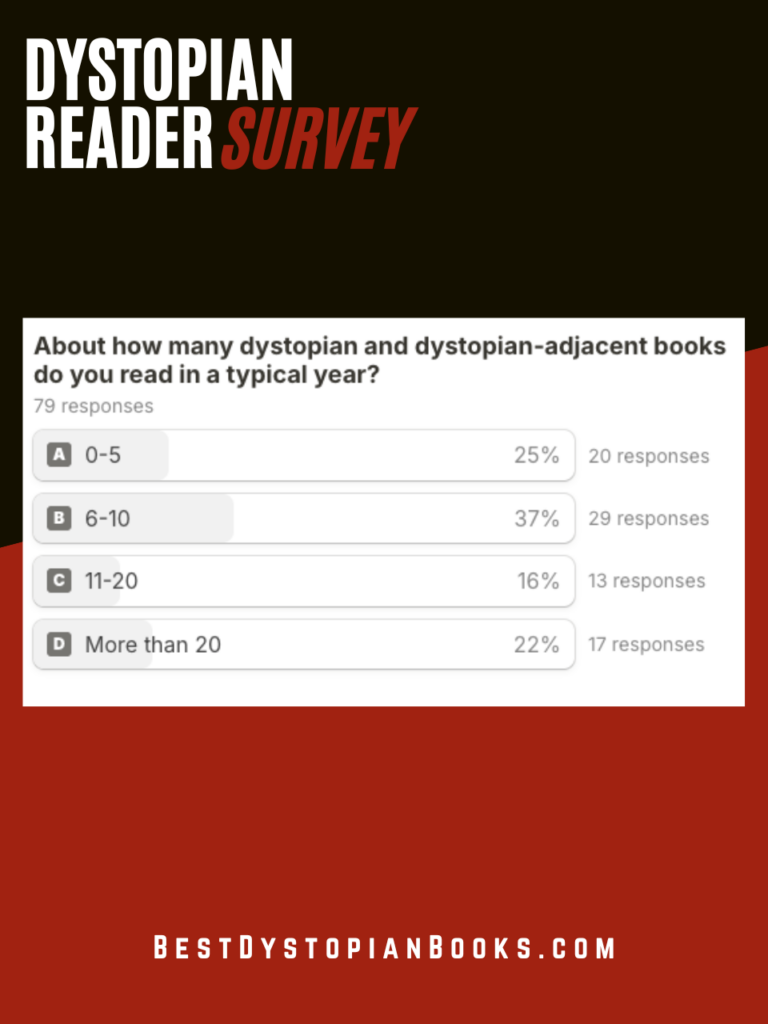
That selectivity shows up even more clearly in how dystopian readers respond to new releases. When a new book by an author they like comes out, only 14% preorder and 9% buy in the first week. Meanwhile, 34% add the book to their TBR and read it eventually and 21% wait until they can borrow it from their library.
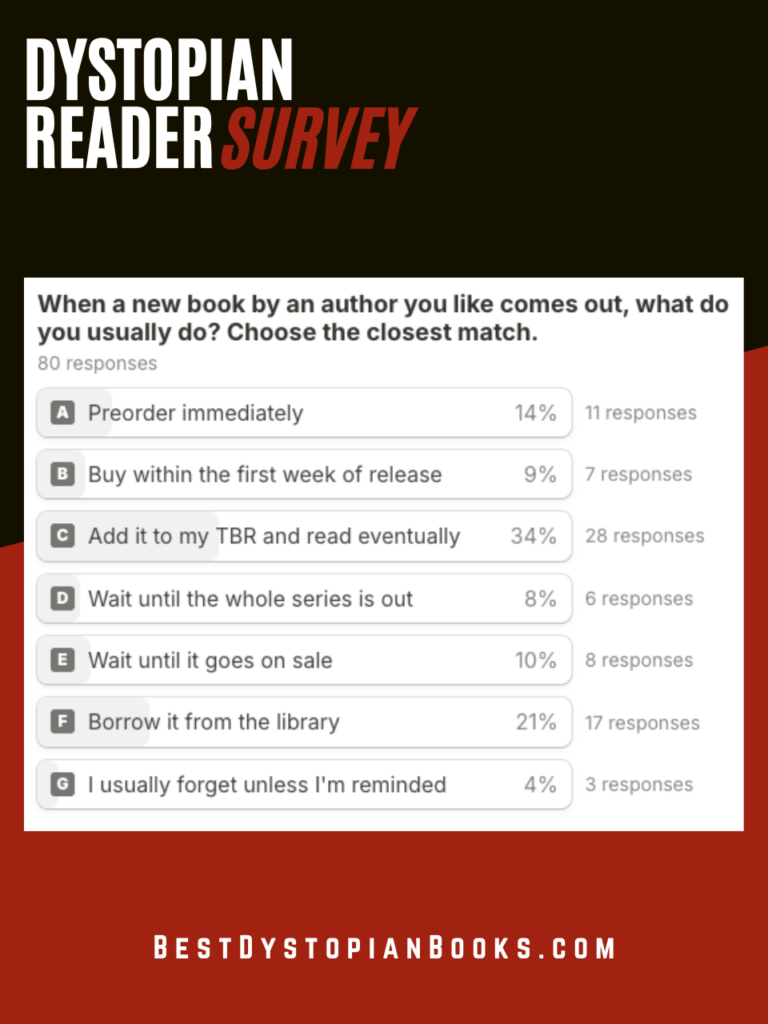
Taken together, these results point to a consistent pattern. Dystopian readers carefully curate what they read, let books rest on the TBR pile, and come to them on their own timeline.
There are a few likely factors behind this:
- The genre is heavier. Dystopian stories often require more emotional and mental investment than lighter reads.
- Readers are looking for substance. As earlier results showed, they care about meaning, nuance, and strong execution.
- Discovery is intentional. Readers aren’t impulsively picking things up – they’re evaluating what’s worth their time.
In a genre known for big ideas and lasting impact, that slower pace may be exactly what allows those stories to resonate, giving readers the space to choose deliberately, engage on their own terms, and carry those ideas with them after they’ve finished reading.
What These Dystopian Reader Trends Actually Show
Although the sample size is small, these responses point to clear trends in dystopian fiction. Dystopian readers aren’t casual and they aren’t generally given to binge-reading.
They choose their books carefully, prioritize meaning over comfort, and engage with these stories in their own time, and in private spaces.
They want books with depth and substance, rejecting simplistic treatment of the genre.
For those who write dystopian fiction, this means being prepared for slower discovery via platforms authors may not have as much control over as social media. Readers want to find dystopian fiction via retailers, friends and deliberate searching, which means clarity on the book packaging itself – what the story is and who it’s for – matters more than volume or speed of publishing.
Dystopian readers aren’t rushing to keep up with the genre – they’re choosing what’s worth their time. The good news is none of this requires chasing trends. In fact, the opposite may draw more readers: dystopian books that resonate because they’re unique, well-developed and have something meaningful to say.
Dystopian fiction is a genre that constantly evolves with the times readers find it in. Right now, they’re looking for broken worlds that can be fixed, they want well-rounded characters and rich worldbuilding, and they’re sinking their teeth into the books they choose rather than rushing through them.
Do you know the difference between dystopian and post-apocalyptic fiction? Learn how to spot them, and check out my top recommendations for each.